- Insights
6 identity verification insights of 2025: From UX to eIDs and the rise of intermediaries
Six identity verification insights from 2025, from user experience to eIDs and the rise of intermediaries.
ㅣ
Paola Markart
ㅣ
5 min read
In 2025, digital identity has become integral to our daily lives, influencing how we access services, protect our data and interact online. With rapid advancements in technology as well as evolving threats, understanding the current landscape is crucial.
That’s why we’ve listed six important identity verification insights every organization should know about right now.
From the growing role of user experience (UX) and the integration of eIDs, to the emergence of a new concept in the ecosystem the identity intermediary — this blog breaks it all down.
1. Digital identity is undergoing a fundamental shift
The digital identity landscape is undergoing a fundamental transformation. For years, businesses have relied on document-based IDV processeses: upload a photo ID, take a selfie and wait for someone to review it. But in today’s digital-first world, this approach is increasingly insecure and inconvenient.
Paper-based IDV holds limitations. They are:
Vulnerable to fraud, including forgery and identity theft
Prone to manual errors and delays that slow down user onboarding
Poor mobile UX, with friction-heavy upload steps
Inconsistent compliance readiness across markets
As part of this shift, government-backed electronic IDs (eIDs) are gaining significant traction across Europe and beyond. These digital credentials are redefining what secure and user-friendly verification looks like especially as adoption accelerates through initiatives like eIDAS 2.0.
And the benefits of using eID for ID verification are immense. They:
Enhanced security: eIDs are issued and verified by national authorities, ensuring a high level of trust, data integrity, and compliance.
Instant verification: Real-time authentication eliminates the wait times, review queues and errors common in manual checks.
Seamless user experience: With credentials stored on mobile devices, users can verify their identity instantly: no paper, no scanning, no friction.
2. The IDV market is set to reach $145B by 2030
The digital identity verification (IDV) market is entering a phase of exponential growth, projected to surpass $145 billion globally by 2030. This surge is fueled by a convergence of global trends:
Rising fraud and security threats, demanding more robust IDV systems
Global regulatory pressure for stronger data privacy practices, and
Growing user expectations for seamless, secure online experiences
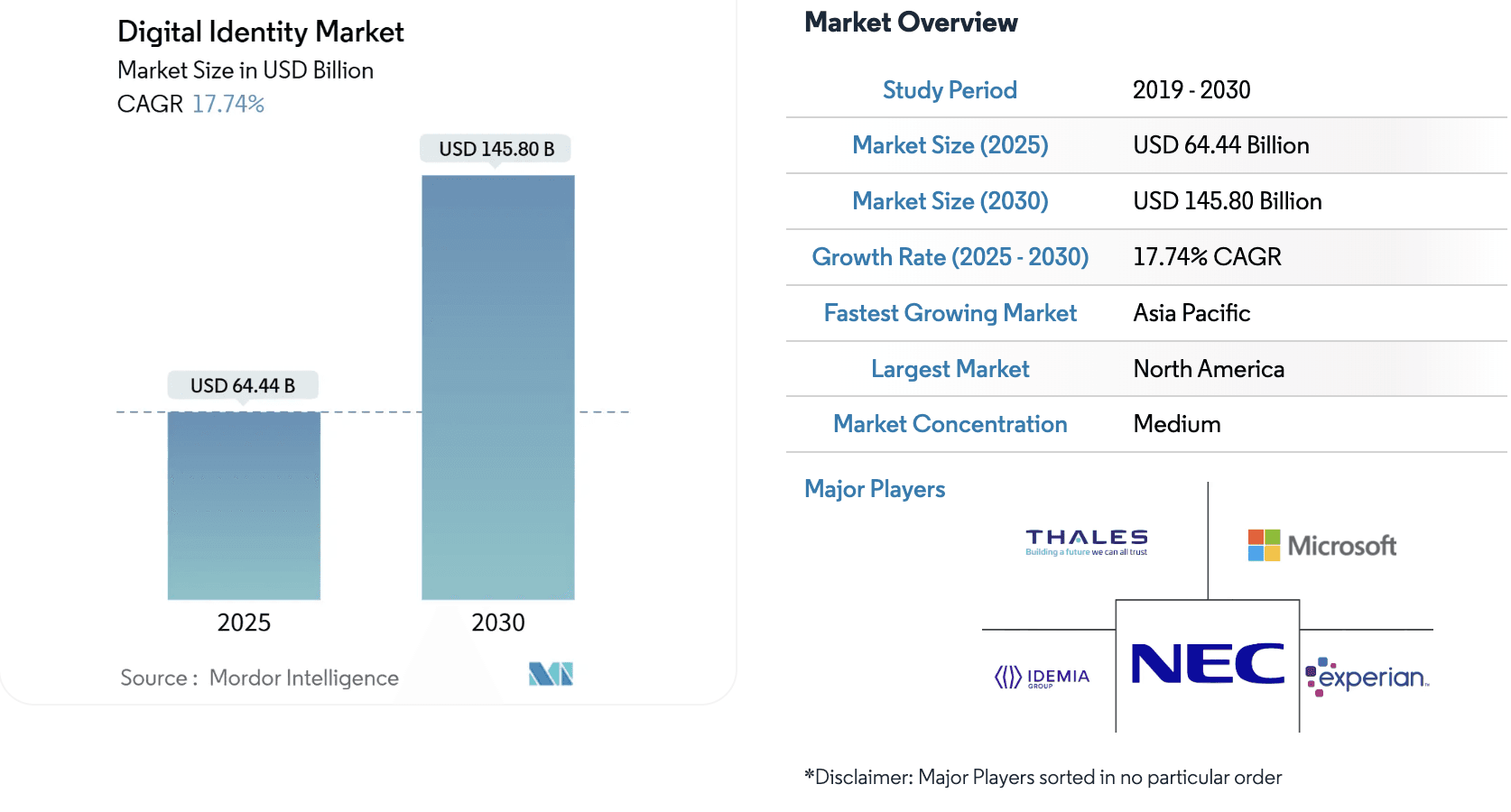
Graph overview of expected market growth by 2023 (Source: Mordor Intelligence)
At the same time, a growing number of industries are shifting toward next-generation IDV solutions that offer faster, more secure and regulation-ready identity verification at scale:
The financial services sector is projected to drive $40 billion in revenue for vendors offering biometric and digital identity solutions.
The travel and hospitality industries are expected to facilitate 263 billion biometric-enabled transactions, generating $72 billion in revenue.
Government agencies across civil identity, healthcare, social services, and border control are set to invest $202.5 billion in digital identity and biometric technologies to support 6.4 trillion identity transactions.
As the market scales and investment surges, the opportunity is clear: identity verification is a core driver of trust, growth and digital transformation.
3. User experience is the key to winning trust in IDV
User expectations are playing a defining role in the evolution of digital identity verification. Today’s users don’t just want secure processes, they expect them to be fast, frictionless and adapted to their needs. In high-trust sectors like banking, travel and healthcare, this shift toward user-centric design is becoming a make-or-break factor for engagement.
And convenience is king. Lengthy or confusing onboarding flows often lead to frustration and abandonment. In fact, 63% of users drop out of the verification process if it’s too slow or complicated, a figure that rises in industries with higher compliance demands, such as finance (Innovatrics, 2024).
But convenience isn’t the only driver. Today’s identity solutions must also be customizable, to reflect specific regulatory, geographic or sector-based needs.
The message is clear: A clunky user experience isn’t just a flaw, it’s a business risk. Those who fail to prioritize UX in their IDV journeys will continue to see higher abandonment rates and lower conversion across key touch points.
4. Regulatory compliance isn’t a cost, it’s a competitive edge
In 2025, regulatory compliance has evolved from a box-checking exercise into a core differentiator. With privacy frameworks like GDPR, CCPA AGDIS and now AI-specific regulations gaining traction globally, businesses are under pressure to prove not just that they’re compliant, but that they’re proactively building trust through secure and ethical data practices.
For identity verification providers, this shift means that compliance can unlock faster market entry, greater user confidence and smoother partnerships with regulated industries like finance, healthcare and government.
That’s why at Hopae, compliance isn’t an afterthought. Our products are designed from the ground up to be eIDAS 2.0, GDPR and KYC ready.
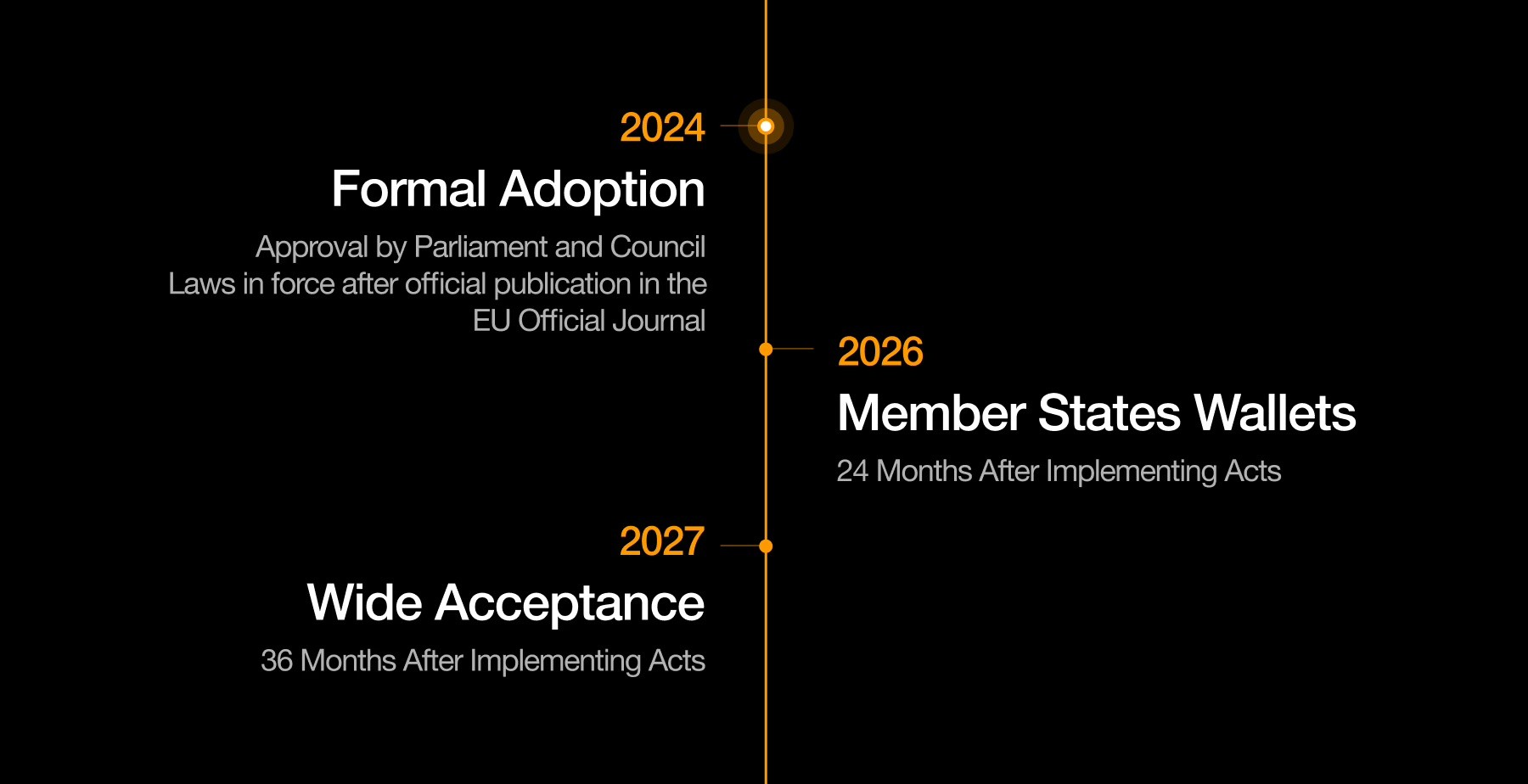
eIDAS2.0 roadmap
5. eID integration is complex but crucial for success
eIDs are quickly becoming the new standard in digital identity verification. With initiatives like eIDAS 2.0 aiming for 80% citizen adoption by 2030 in the EU the momentum is undeniable. Unlike traditional document-based verification, eIDs offer real-time, government-backed identity validation that boosts conversion, trust and user satisfaction.
But while the benefits are clear, integration is anything but simple.
Companies looking to support eIDs must navigate a fragmented and often burdensome landscape while facing three core challenges when approaching integration:
Administrative complexity, as obtaining access to official eID systems is often costly and bureaucratic
Technical fragmentation, since each eID follows its own protocols, formats and security requirements
Cultural barriers, with different levels of digital literacy, trust and local expectations around identity usage
As eID adoption accelerates globally, these challenges can quickly multiply, especially for organizations operating across borders. So to fully leverage the value of eIDs companies need a strategic more scalable way to connect.
6. Identity intermediaries are the next evolution in digital identity
As regulation deadliness narrow in and regulation like eIDAS 2.0 mature, a new concept is gaining traction in the digital identity ecosystem: **the use of an intermediary.**
Introduced in the official eIDAS 2.0 Architecture Reference Framework (ARF), an intermediary refers to entities that act as trusted access points between relying parties and national eID providers.
Why does this matter?
The expanding landscape of eID systems is creating significant complexity for businesses. For companies looking to adopt eID-based verification workflows, two paths are emerging:
Direct integration → high effort, high complexity
Indirect integration → using an intermediary layer
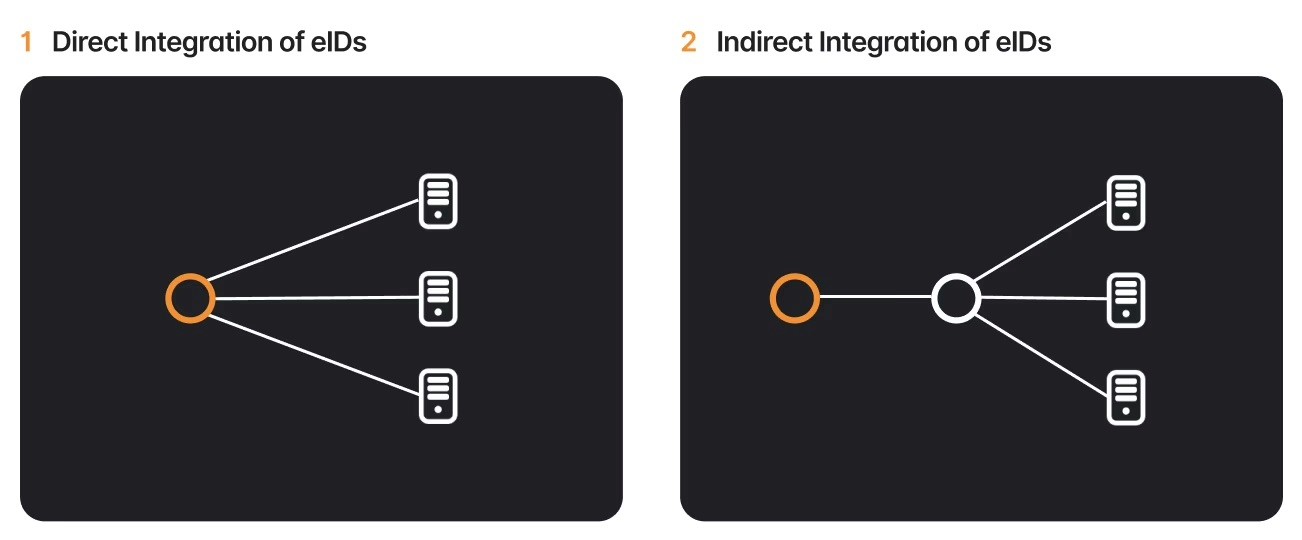
Overview of eIDs integration models
Building direct integrations with multiple national eIDs is not only time-consuming and expensive, but also difficult to scale. That’s why the intermediary model is gaining momentum.
Indirect integration via an intermediary offers a streamlined, scalable integration approach: Connect once and gain access to multiple national eIDs through a single, unified interface.
Stay tuned for a more in-depth series on intermediaries in IDV and how to pick the right one for your business!
The bottom line
With rapid innovation reshaping the identity landscape both individuals and businesses must prepare now, for whats ahead. For companies especially, this shift calls for strategic choices by selecting identity solutions that address real pain points, meet user expectations and support long-term growth is no longer optional.
Curious how Hopae can help you stay ahead in the era of digital identity? Book a meeting with us today!