- Selected for Gartner Market Guide 2024 and 2025
- News
EUDI Wallet & eIDAS 2.0: Why companies should prepare now
ㅣ
Maïlys Mas
Digital identity in Europe is entering a new phase. With eIDAS 2.0 legally in force and the EUDI Wallet (EUDIW) rolling out across Member States in a few months, organizations that require identity verification processes will soon be operating under new rules and new expectations.
Whether you are a public platform, an IDV provider, an eSignature platform, an AML-regulated company or a Very Large Online Platforms (VLOPs), this shift towards digital ID affects how you onboard, authenticate and retain users.
This guide breaks down the essentials and explains what the new obligations mean for your business, why the EUDI Wallet matters and how you can prepare ahead. But before diving in, let’s clarify the core concepts.
What is eIDAS 2.0?
eIDAS 2.0, formally known as Regulation (EU) 2024/1183, is the updated EU regulation governing digital identity and trust services. It entered into force on May 20, 2024 and introduces a harmonised framework to digital identity across all Member States.
The regulation has three core objectives:
Give every EU citizen and resident access to a recognized digital identity wallet
Strengthen trust services such as qualified signatures and attestations
Ensure seamless cross border identification and authentication
When it deals with identification, Member States must make their Wallets available by the end of 2026. Public and private sector obligations take effect gradually but most regulated services will need to support Wallet based identification by the end of 2027.
What is the EUDI Wallet?
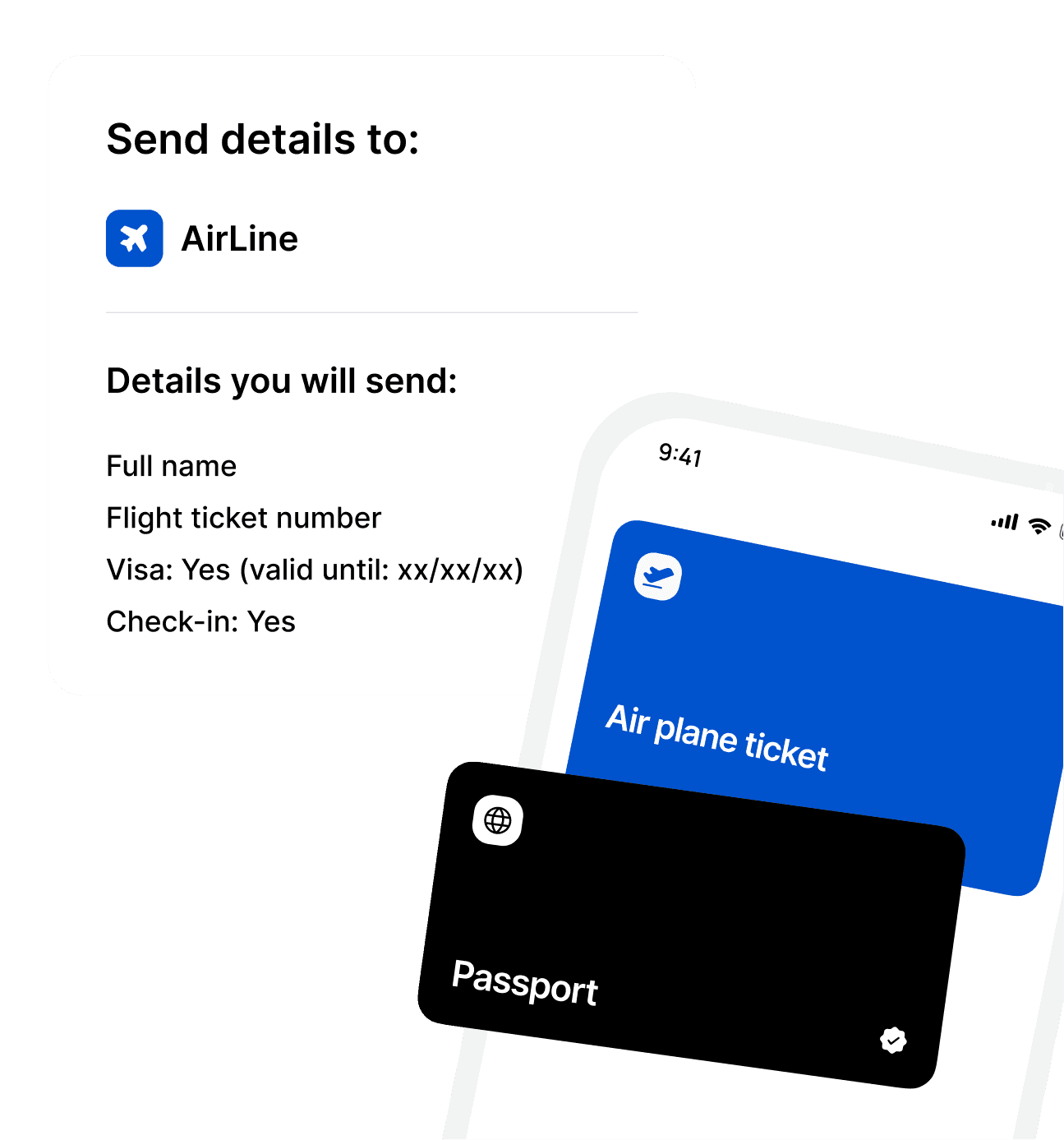
The European Digital Identity (EUDI) Wallet is a secure digital identity application built on Decentralized Identity (DCI) principles giving end-users full control over their personal data while enabling trusted interactions across the EU. It allows EU citizens, residents, and businesses to store and use verified identity attributes (e.g. PID, driving licence, qualifications, private Verifiable Credentials…) directly from their device. The Wallet supports high-assurance authentication, access to public and private services, and electronic signatures.
Because data stays with the user, there is no need to upload scans of identity documents. The Wallet ensures strong privacy protection: individuals decide how, when, and which data is used and share only what is necessary. For example, a user can:
Confirm they are over 18 years old
Prove their identity to AML standards
Show a valid licence or qualification
This capability, known as selective disclosure, reduces unnecessary data exposure, limits identity-theft risks, and removes friction in verification flows.
Cross-border interoperability is built in. A Wallet issued in one Member State works across all others, allowing organizations to rely on a single, high-assurance identity mechanism for the entire EU market.
Mandatory obligations for companies under eIDAS 2.0
eIDAS 2.0 introduces clear obligations for public services, and private services regulated under AML as well as VLOPs. If your organization is legally required to verify identity today, you will need to support Wallet based identification tomorrow.
This includes:
Financial institutions: Banks, fintechs, payment services, crypto…
Telecom operators
Regulated gambling and gaming platforms
VLOPs offering user accounts/login and operating in Europe
Any service where strong authentication is required by law
By December 2027, users should be able to identify themselves with their EUDI Wallet as an alternative to traditional identification means. But to integrate with 27+ EUDI Wallets, obliged companies will have to make a strategic choice between direct or indirect integration.
Meet compliance in one click with Hopae Connect! Request a demo.
EUDI Wallet integration: Build directly or rely on an intermediary?
The EUDI Wallet is built on common EU standards, but each Member State will have its own wallet trust root. As a consequence, enterprises that need to provide wallet usage will have to get access to the 27 Member States root trust and manage them through an integration hub that they will have to build and support by themselves. Furthermore, to get access to these trusted registries, they will also have to register through a Member State to be part of this trust chain.
As an alternative to this in-house approach, the eIDAS2.0 Architecture Reference Framework (ARF) has introduced the “Intermediary” role, an organization being able to act on behalf of Relying Parties when it deals with wallet access and usage. Organizations now face a strategic choice.
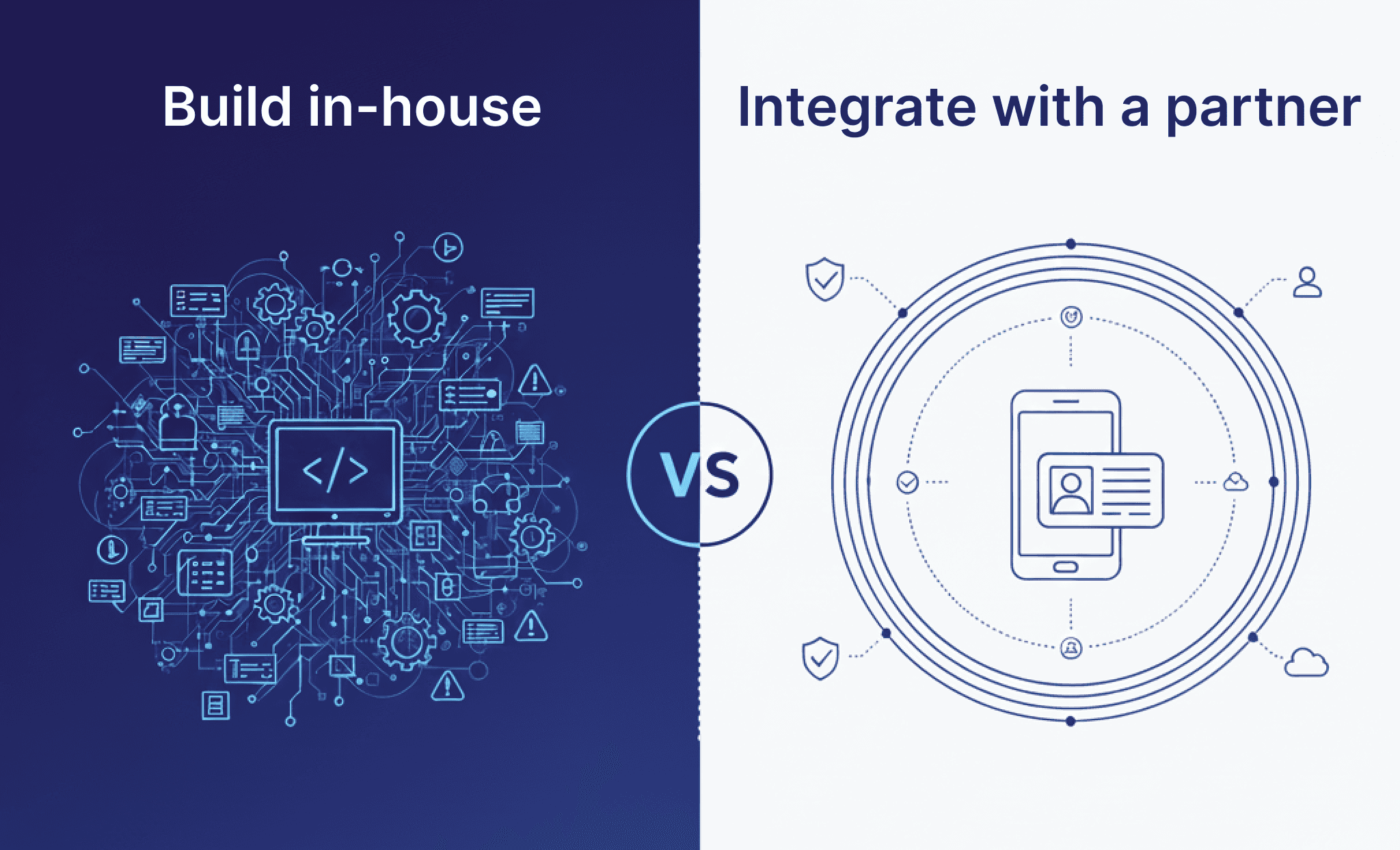
Build in-house: EUDI Wallet direct integration
Direct integration is not as simple as connecting to one API. It means owning the full technical, regulatory, and operational workload. This includes:
Interpret the ARF and turn hundreds of pages of specifications into compliant user journeys
Build and maintain wallet connectors capable of handling national variations
Implement the cryptographic protocols, credential formats, and verification flows of a decentralized identity system
Support audits, logging, trust registry checks, and evolving technical standards
Maintain long-term engineering capacity to keep the integration compliant
Reality: Even if only one connection point is needed, reaching full compliance takes usually more than 18-24 months. And the work doesn’t end at launch, standards, wallet versions, and requirements will evolve. This is heavy, costly, and complex.
Rely on a trusted partner: EUDI Wallet indirect integration
As defined under the ARF, the intermediaries, represent a special class of Relying Parties acting on behalf of them to connect to Wallets and request user attributes. An intermediary:
Handles all Wallet interactions on behalf of businesses
Manages verification, trust checks, and compliance updates
Deletes data immediately after transmission, preserving privacy
Absorbs long-term maintenance and regulatory changes
For most companies, this model dramatically reduces cost, complexity, and risk, while accelerating compliance timelines from years to weeks.
Want to integrate once and access Wallets? Request a demo.
EUDI Wallet: Why start preparing now?
Most companies have spent years optimising their identity flows with traditional methods to reach today’s conversion rates. But these rates can still improve. The EUDI Wallet promises faster and smoother onboarding with fewer drop-offs, yet its benefits won’t appear overnight. Companies will need time to adapt to the new flow introduced by the EUDI Wallet, and conversion rates may fluctuate at first.
Starting early is the smarter move: integrating now and observing how wallet-based identity impacts your user journey gives you time to optimize well before adoption becomes mandatory.
The good news is that you don’t need to wait for the EUDI Wallet to begin. Many European countries already offer strong, wallet-like national eIDs used by millions of people (SPID, itsme, BankID, MitID, Identité Numérique…). From a user experience perspective, these systems work very similarly to what the EUDI Wallet will introduce.
Integrating eIDs today helps you prepare your onboarding flows and unlock immediate value.
Book a demo with us to integrate with eIDs now and future-proof your onboarding for the upcoming EUDIW.
Engage with Hopae Connect to get prepared
The EUDI Wallet initiative launched in Europe will deliver the level of trust that online transactions have been missing. The real question for companies is whether they approach it as a one-off compliance project, or take this opportunity to rethink their entire onboarding experience around digital identity (national eIDs, digital wallets, or any verified identity method).
Hopae Connect empowers companies to do exactly that by integrating the EUDI Wallet and all existing or future eIDs into a single, unified verification hub:
One API that gives you access to global eIDs and digital wallets (including the EUDI Wallet)
One contract to handle all the eIDs you need without legal or technical maintenance
Compliance-ready in one click with evolving regulations and standards (AML-R, eIDAS 2.0, age verification etc.)
AI-driven fraud protection with government-backed eIDs and the EUDI Wallet. Hopae Connect ensures instant revocation checks, and maintenance of full root of trust
Enterprise-ready infrastructure with full audit logs, strict compliance with leading standards and certifications (ISO, SOC 2 Type II, GDPR…), and sovereign-grade hosting in Luxembourg through INCERT.
Book a consultation with Hopae and define your EUDIW and global eID strategy with support from our experts.